





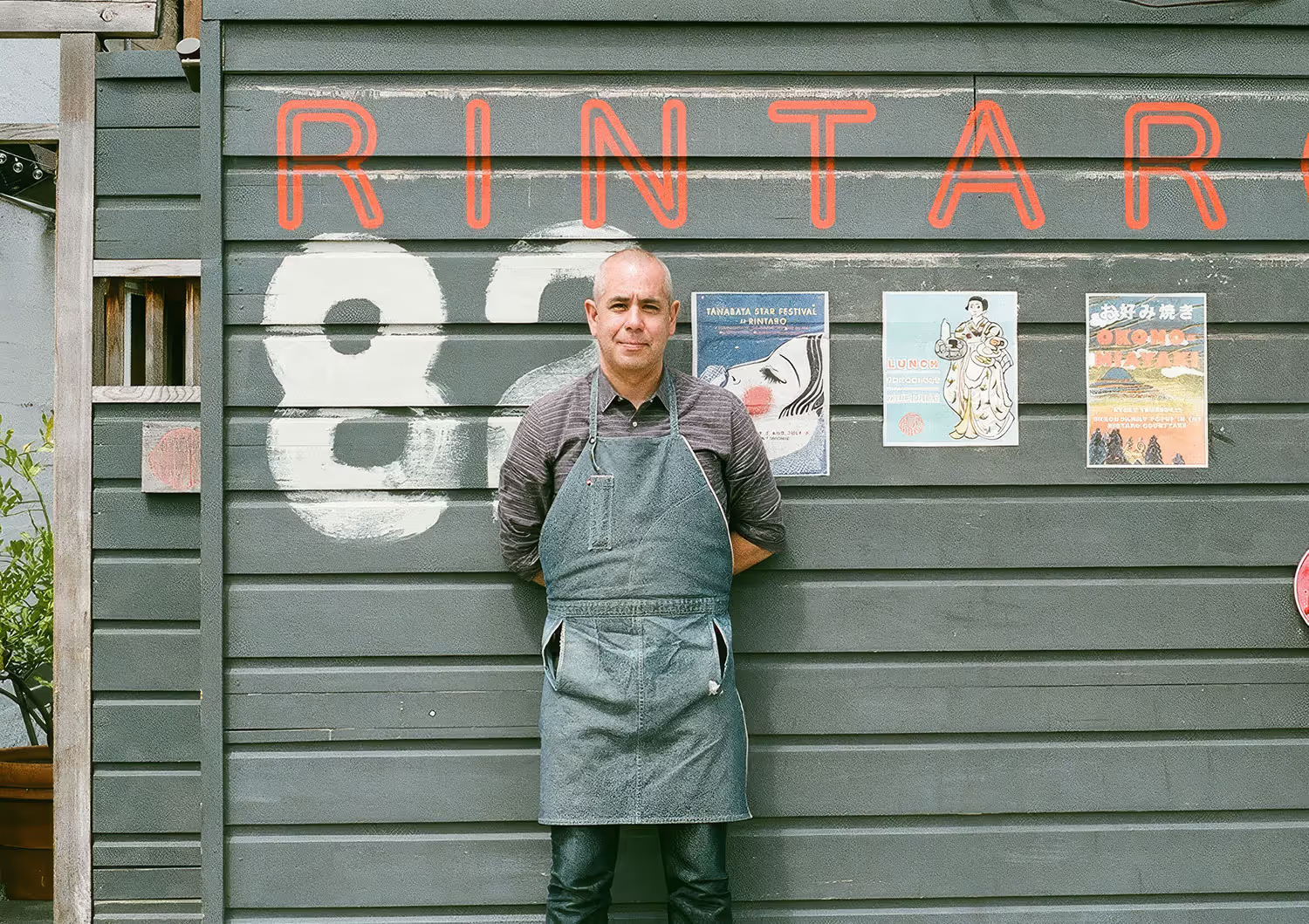
How Rintaro built a sold-out monthly Japanese bento subscription
A four-part series following Chef Sylvan Mishima Brackett and Chef Mamiko Kobayashi as they build a bento, from first idea to final box.
Direct Online Sales
Predictable recurring bento revenue
Key Results
- Seasonal ingredients and exacting craft supported by a guaranteed subscriber count
- Consistent team, workspace, and production rhythm for a complex monthly bento program
- Table22 handles the administrative layer so Chef Sylvan can focus on sourcing, cooking, and presentation
Overview
Every month, Chef Sylvan Mishima Brackett feeds a vintage Japanese matchbook design through a sturdy old printer onto washi rice paper, and wraps it around a bento box that took his team weeks to imagine, source, test, and assemble. It's a creative labor of love, infused with cultural heritage and backed by decades of expertise.
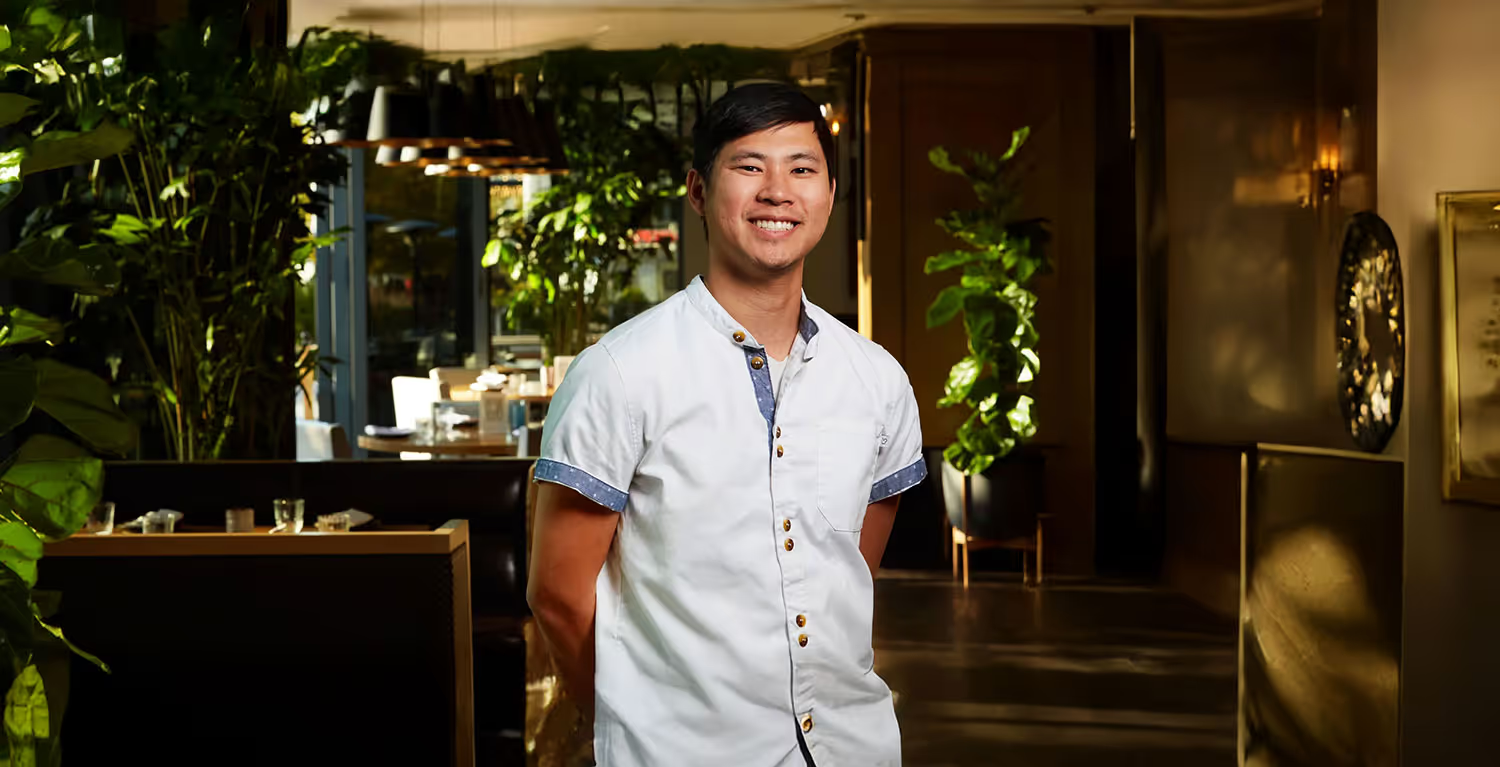
Chef Sylvan was born in Kyoto, raised in Northern California, trained at a ryotei in Tokyo and alongside Alice Waters at Chez Panisse. He opened Rintaro in San Francisco's Mission District in 2014 - an izakaya built with hand-planed wood by his father, using traditional joinery and 100-year-old redwood wine casks. Bon Appétit named it a Top 10 New Restaurant within six months. It's been Michelin recommended since 2016, and a debut cookbook followed in 2023.
Through his Table22 subscription, Chef Sylvan and his team produce a new bento every month, a process helmed and championed by Bento Chef Mamiko Kobayashi. Each box is a composed, seasonal experience that changes every cycle, showcasing the same uncompromising craft that built Rintaro's reputation.
We spent a month inside that process. Four weeks, four episodes - from the first spark of an idea at the farmers market to the moment the last wrapped box leaves the kitchen.
This is the Rintaro Process Diary.
Episode 1: The Season in a Box
This is the first installment of the Rintaro Process Diary, a four-part series following Chef Sylvan Mishima Brackett as he creates November's bento from concept to completion.
The persimmon leaves wrapped last month's sushi. This month, those same trees have turned red and orange, and Chef Sylvan has had them harvested as garnish for the desserts. It's the kind of continuity that only exists when a chef has freedom to think in seasons.
November's bento begins the way every month does at Rintaro: with a conversation between feeling and ingredient. Chef Sylvan and his team consider the weather, what people want to eat as the temperature shifts, and then they look at what's hitting its peak. It's an interplay - sometimes the theme comes first, sometimes an ingredient demands attention, and the menu builds itself around that tension.
This month, it's beef. Rintaro hadn't featured it in a while, and Chef Sylvan has a supplier he trusts: Country Natural Beef, a cooperative of family ranchers in Washington and Oregon. He's buying flat iron steak, a cut he recently learned ranks as the second most tender after tenderloin. It'll be prepared as shigureni - slow-simmered with soy sauce, mirin, and sugar until it develops a deep, velvety richness.
The first mustard greens have appeared at the farmers market, and with them comes takana tsukemono - a salted, lactic-fermented pickle seasoned with soy, mirin, and Japanese chilies. Chef Sylvan says it's one of his favorite pickles of all time. The fermented spice plays against the tender beef in the way great bento components should: each element complete on its own, and even better in conversation.
Then there's the yuzu.
Sylvan works with a distributor known as the Fruit Queen, a woman who travels the state developing relationships with farmers who grow extraordinary things. The yuzu coming through her this month is, in Sylvan's words, the best he's ever seen in California. It'll anchor the dessert - a nerikiri, a traditional Japanese wagashi confection made by one of his line cooks. It's a soft sweet bean paste with a mochi covering and finished with yuzu paste, a tea sweet elevated into the bento format.
"One really great thing about these bentos is we can use ingredients that have a very short window of availability. Sometimes it's really short and it's a little nerve-wracking that we're going to make it through the entire month."
That nerve, the tension between ambition and availability, is exactly what makes a subscription model essential for this kind of work. Chef Sylvan knows he's making a set number of boxes - not a guess, not a projection, a real count locked in through Table22 subscribers, that lets him commit to the yuzu, the flat iron, the mustard greens, and the handmade nerikiri without calculating the downside.
Most restaurants can't plan menus around ingredients with two-week windows. The risk is too high. But when you know the number, you can plan for beauty instead of safety.
The bento itself is designed to feel like opening a present. Chef Sylvan custom-designs wrappers for each month, drawing from Japanese matchbook and matchbox art from the 1920s and 30s. He prints them on washi rice paper using a printer he describes as old but sturdy, and wraps them around the wooden bento box. The visual impact when you lift the lid matters to him as much as what's inside.
"I want them to kind of get a real sense of the season. You see the seasons change in your box. I do like that idea of it feeling like it's really specific to this particular time."
That's the R&D week: ingredients identified, techniques chosen, a vision set. Next week, reality arrives - the logistics of turning ideas into identical, beautiful boxes, every single one held to the same standard. And reality, as it turns out, has other plans for the yuzu.
Episode 2: When the Yuzu Runs Out
This is the second installment of the Rintaro Process Diary, a four-part series following Chef Sylvan Mishima Brackett as he creates November's bento from concept to completion.
The transition from R&D to production is where the vision meets the supply chain. Chef Sylvan's team has spent a week developing ideas - now they need to scale them, source them in full, and make every element work at volume. This is the week things break.
And for this month, it's the yuzu.
The Fruit Queen's farmer decided to hold off harvesting the remaining crop until December, so the fruit Chef Sylvan had built his dessert concept around - the best yuzu he'd ever seen in California - suddenly isn't coming in the quantities he needs for a full month of production.
In a different model, this is the moment you either compromise the entire vision or absorb the cost of a failed experiment. But fortunately, Chef Sylvan's working with a guaranteed subscriber count through Table22. The number is set and the revenue is committed. So the question isn't whether to proceed, but rather how to adapt without losing anything that matters.
The pivot is clean: he uses the yuzu already purchased to make the base of the nerikiri, preserving that element of the dessert. For the jelly component though, he shifts to Meyer lemon - its season has just started, and it's abundant in California. Sylvan calls it the quintessential California citrus, noting with some amusement that it's surprisingly uncommon elsewhere in the world. The cream jelly paired with the yuzu nerikiri becomes something new, still seasonal, still intentional.
"We've had to pivot. We're taking some of the yuzu we already purchased from them to make nerikiri. But for the jelly, we decided to go with Meyer lemon."
Meanwhile, the savory components are coming together. The flat iron steak is being prepared as shigureni - that long, slow cook with soy sauce and mirin that gives the beef its deep, teriyaki-reminiscent character while the cut's natural marbling keeps the texture velvety. The takana tsukemono is fermented and seasoned, its bold spice designed to complement the richness of the beef.
And Chef Sylvan is testing two new satsuma-age varieties. The fish cakes are a bento staple at Rintaro, always built on local lingcod, which Chef Sylvan considers the superior base. But the preparations this month are new. One features lotus root - hand-trimmed to highlight its natural flower-like cross-section, then sliced on the bias so the pattern shows on top of the cake. The other is a kinpira version: burdock root and carrot, lightly sautéed, inserted into a baton-shaped fishcake and cut in half so you can see the thinly sliced ends of the gobo and carrot when you open the box.
These take some figuring out. Each satsuma-age variety requires its own prep sequence, its own timing, its own visual standard. The lotus root trimming alone is meticulous work. But this is what the testing week is for - discovering which elements hold at scale, which techniques survive the jump from six servings to a minimum 150 servings, and where the timing gets tight.
"The kind of transition from research and development to production is really a lot of logistical stuff. We're figuring out the logistics of taking the ideas we've come up with during R&D week and scaling them."
The questions multiply: When do you char the beef so the color lasts until the customer opens the box? How do you coordinate the bento team and the regular dinner service prep team in the same kitchen? Can the lotus root pattern hold when you're making them by the dozen?
These are the kinds of problems most restaurants can't afford to spend a week solving. Uncertain demand makes the investment feel reckless. But with subscribers locked in and Table22 handling the administrative side, Sylvan can treat the yuzu shortage and the scaling challenges as creative work - the kind of problem-solving that makes the final product better, not just possible.
The goal isn't just to make 100 boxes. It's to make 100 boxes that hold every standard set during R&D - even when the yuzu farmer has other plans.
Episode 3: 189 Boxes, Every Detail
San Francisco, CA | Izakaya | Monthly Bento Subscription via Table22
This is the third installment of the Rintaro Process Diary, a four-part series following Chef Sylvan Mishima Brackett as he creates November's bento from concept to completion.
The bento team, led by Chef Mamiko Kobayashi, arrives at 6:45 in the morning. By the time the first box is wrapped with its custom-printed washi paper hours later, they will have cooked, timed, portioned, and placed somewhere between eight and twelve components — each with its own logic, each judged against the standard set weeks ago during R&D.
The team works from a list, and the order matters. Items that hold well, like the fish cakes, can be made early in the morning. Items that need to feel fresh come last, like the panko-fried components, which need to retain a bit of crisp when the customer opens the box hours later. Everything is served at room temperature, but the path to room temperature is carefully choreographed.
Rice is one of the trickiest elements. Anyone who's refrigerated rice knows it transforms overnight into something starchy and flat. Chef Sylvan has developed a custom blend - mochi rice mixed with Koshihikari short-grain Japanese rice - that changes the consistency and, crucially, holds better over time. The blend is the result of ongoing experimentation, the kind of quiet innovation that only matters if you care about how the rice tastes six hours after it's cooked.
When packing begins, the boxes are laid out in batches on a low table - usually around 33 at a time - so the team can maintain a visual overview of every one. They work element by element. Rice first, measured on a scale to ensure identical portions. Then each component, one after another, placed with moritsukebashi, metal chopsticks that Sylvan describes as fine dining tweezers, except more versatile. Garnishes are arranged so that every single box looks the same.
The final touches are where the details accumulate. A leaf of mitsuba (a Japanese herb with a tied stem) goes in last. Behind the gobo, a ginkgo leaf, positioned so the burdock root pops visually against the gold. Then the lid closes, and the custom wrapper goes on.
"There's a lot of thought that goes into all of these tiny details, and it's really gratifying when people see it and get it."
That wrapper is its own story. Sylvan has a background in graphic design from before he opened a restaurant, and he draws on it every month. The images come from Japanese matchbooks and matchboxes from the 1920s and 30s - an inexhaustible well of design that he adapts and prints on washi rice paper. For a few months the printer was down and the team used stamps instead. The printer is back now, and the wrapper is a signature element that subscribers who've been around for a while have come to expect.
The first production day of each month is always the most intense. The team is finding its rhythm - which sheet trays to use, where things sit on the table, the packing order of operations. By the second and third rounds, the process smooths out. But that first day is where every logistical decision from the testing week gets pressure-tested for real.
Here's the thing about ginkgo leaves and mitsuba stems and hand-trimmed lotus root patterns: none of this is economically justifiable under uncertain demand. You can't afford to care about the placement of a single leaf when you don't know if you're making 30 boxes or 80. But when the number is set - when subscribers have already committed through Table22 - you can build the entire production day around the standard you actually want to hit.
The boxes are packed. The wrappers are on. The drivers are coming.
It's time to meet the members.
Next: Episode 4 - Made by Rintaro, Powered by Table22 →
Visual Asset Recommendations
Episode 4: Made by Rintaro, Powered by Table22
This is the final installment of the Rintaro Process Diary, a four-part series following Chef Sylvan Mishima Brackett as he creates November's bento from concept to completion.
Here's what Chef Sylvan isn't doing during the month you just watched: fielding emails about delivery day changes, coordinating drivers, processing payments, managing subscription billing, or wondering how many boxes to make.
He's in the kitchen. That's the point.
The division between Rintaro and Table22 is clean and deliberate. Chef Sylvan and Chef Mamiko Kobayashi own the creative direction, sourcing, cooking, and quality control — everything that requires a chef's eye and a chef's hands. Table22 handles member management, communication, payment processing, delivery logistics, and customer service. Every administrative touchpoint the subscriber experiences runs through Table22.
"All of that kind of administrative work is what the customer sees, and it takes a lot of time to do it, and usually we're in the kitchen, not in front of the computer."
The customer-facing side is more complex than it looks: subscribers change their plans, they need to switch pickup days, they have questions. Chef Sylvan describes the volume of communication as a constant stream, and credits his Table22 rep, Parker, with handling it with clarity and speed. That's not a small thing for a chef running a full restaurant alongside a weekly bento operation - Rintaro rather uniquely fulfills three times a week, not once a month.
The stability that comes from Table22's infrastructure goes deeper than convenience. It's the foundation that lets Chef Sylvan keep his bento team consistent, his workspace organized, and his creative process focused. Without a guaranteed subscriber count, the bento program would require either scaling up and down constantly - absorbing the inefficiency and waste that comes with uncertain demand - or playing it safe with simpler menus that don't require the R&D investment Chef Sylvan enjoys putting in every month.
"Selling through Table22 keeps that consistency - allows us to have a team which is consistent, a workspace which is consistent, and keeps us from having to scramble. So we can focus on making them beautiful."
The feedback loop confirms the model is working. Subscribers tag Rintaro on social media, and what Chef Sylvan appreciates most is when people notice the details he never explicitly calls out - the various soy sauces paired with different fish, the gobo cooked in iron until it turns jet black, the way the menu is folded around the napkins so the box looks right when you open it.
At a recent Hawaii food event, several chefs told Chef Sylvan they'd eaten his bento. Peer recognition from other professionals - people who judge by the same standards he holds himself to - is its own kind of proof that the subscription format hasn't diluted the craft. If anything, the bento has become another canvas for the same meticulous work that earned Rintaro its Bon Appétit recognition and Michelin recommendation.
And there's a Japanese woman with a blog about her life in San Francisco who subscribes and writes about each bento monthly. Chef Sylvan's mother found her. He reads the posts with genuine anticipation.
That's the signal that matters: the work speaks for itself. The wrapper design, the persimmon leaf progression from one month to the next, the hand-made nerikiri, the ginkgo leaf behind the burdock root - people see it, and they get it.
The subscription model didn't just create a new revenue stream for Rintaro. It created the conditions for Chef Sylvan’s team to do the kind of work that's hardest to justify in a restaurant: slow, seasonal, detail-obsessed, and beautiful. Table22 handles everything that isn't the food. And the certainty allows the craft to flow.
We handle the hard parts,
so you can focus on your patrons
Commerce made simple
Seamlessly manage subscriptions, memberships, pre-orders, and storefronts.
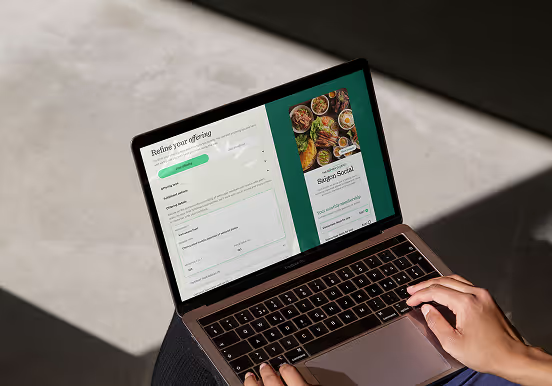
Manage memberships, drops, and upsells in one clear system. Everything is structured to give you visibility, control, and consistency, without adding complexity to how your business already operates.
Zero-lift growth tools
Launch powerful campaigns, retention efforts, and more to drive repeat revenue.
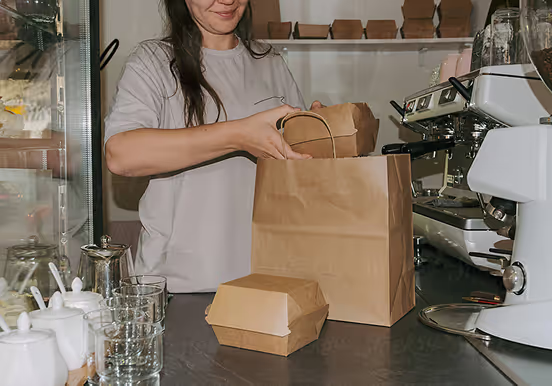
Automated lifecycle campaigns help you acquire, engage, and bring members back. Messaging is timed, thoughtful, and built around hospitality, increasing retention and long-term program stability.
Logistics, covered
We handle in-person pickup, national shipping, and local delivery for you.
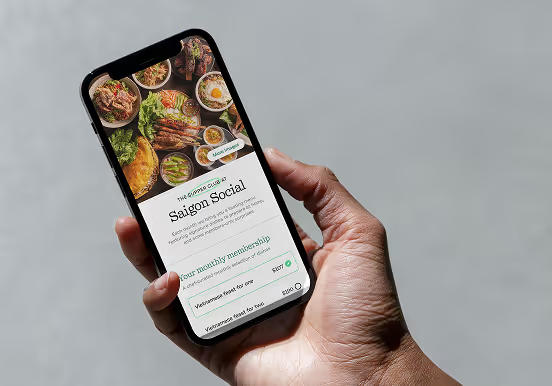
From labels and packing guidance to pickup coordination and delivery, we handle the operational details. Every order reaches members smoothly while your staff focuses on the craft and experience.
Human support
Get unlimited white-glove support from a team that helps bring your ideas to life.

Our team works alongside yours, from launch to optimization. We blend operational expertise with empathy, helping you solve issues, refine your program, and grow with confidence over time.
More Case Studies


Let’s build something that lasts.
Try Table22 for free, cancel anytime.